

Industrial Wet Paint Systems for Metal Fabrication
This Page us Under Construction
Wet paint remains one of the most versatile finishing methods in metal fabrication. Manufacturers use industrial paint systems to protect fabricated steel, stainless steel, and aluminum from corrosion, ultraviolet exposure, chemicals, abrasion, and weather.
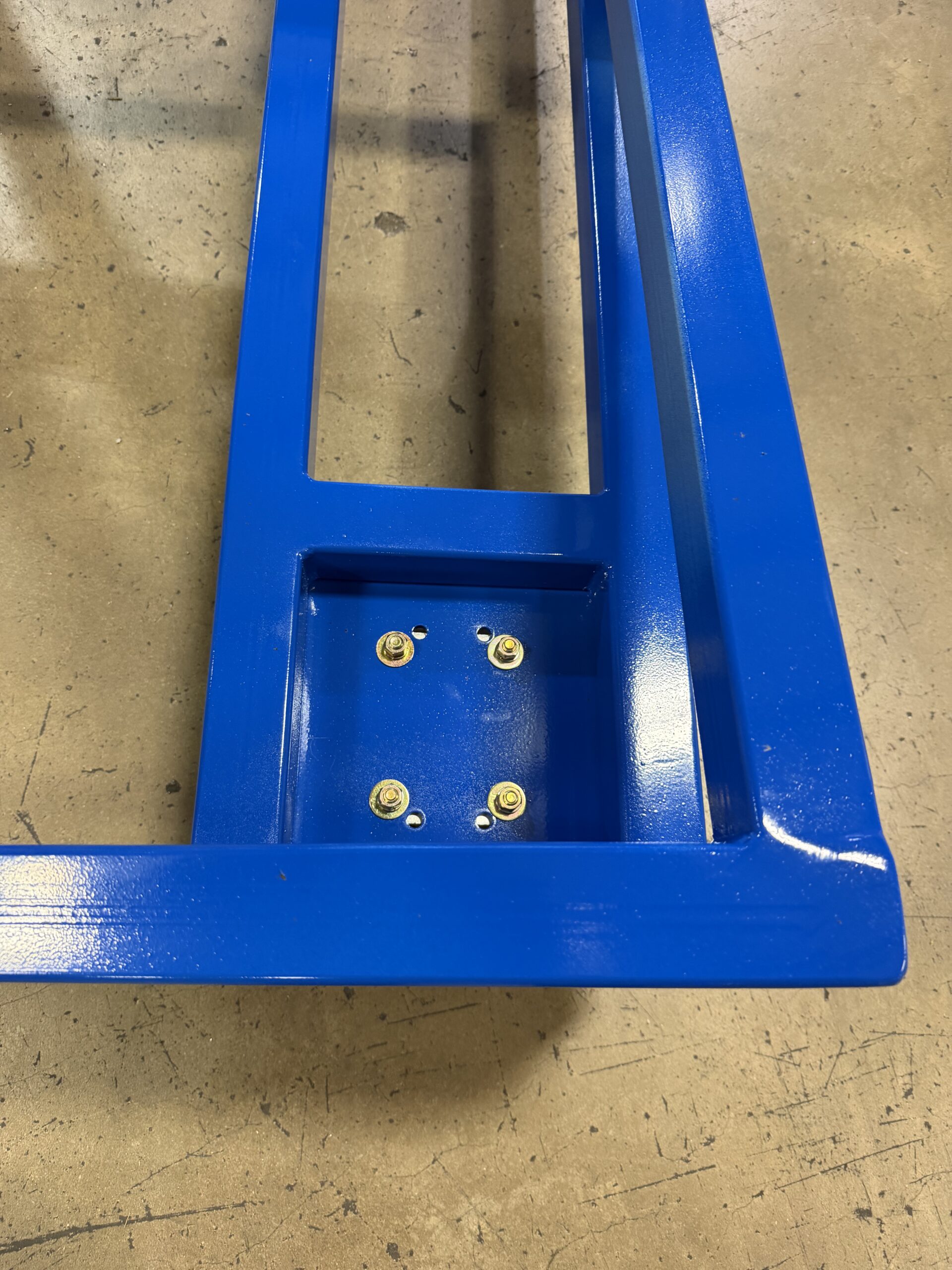
Engineers often specify wet paint when assemblies require precise color matching, field repair capability, large-part finishing, or multi-layer corrosion protection systems. Buyers often choose wet paint because it supports oversized weldments, structural steel, equipment frames, machinery bases, enclosures, and OEM products.
Why Manufacturers Choose Wet Paint
Wet paint provides flexibility across a wide range of industries.
Common applications include:
- Construction equipment
- Agricultural equipment
- Material handling equipment
- Mining equipment
- Transportation equipment
- Structural steel
- Water treatment equipment
- Power generation equipment
- Defense products
- OEM machinery
Unlike many alternatives, wet paint allows fabricators to customize coating thickness, appearance, color, and corrosion performance.
Defining a Complete Paint Specification
Many coating failures begin with incomplete specifications. A complete paint requirement should define every major characteristic of the coating system.
Color Specification
Engineers should identify the exact color standard.
Common color systems include:
RAL Colors
RAL remains one of the most common industrial color standards.
Examples include:
- RAL 7016 Anthracite Grey
- RAL 7035 Light Grey
- RAL 5015 Sky Blue
- RAL 9005 Jet Black
Colors system Pantone
Pantone specifications help maintain marketing consistency.
AMS-STD-595 Colors
Defense and aerospace programs often reference AMS-STD-595 color standards.
Sheen and Gloss Requirements
Paint gloss/sheen affects appearance and durability.
Most specifications state gloss in Gloss Units measured under ASTM D523.
Typical gloss ranges include:
- Flat: 0-10 GU
- Satin: 20-35 GU
- Semi-Gloss: 35-70 GU
- Gloss: 70-85 GU
- High Gloss: Above 85 GU
Dry Film Thickness Requirements
Engineers should specify coating thickness in mils.
One mil equals 0.001 inch.
Typical industrial systems range from 4 to 15 total mils.
Surface Preparation Before Painting
Surface preparation has a greater impact on coating life than paint selection. Paint cannot compensate for contamination, rust, mill scale, or poor preparation.
Degreasing and Cleaning
Fabricators remove contaminants before blasting or painting.
Common contaminants include:
- Cutting oils
- Coolants
- Forming lubricants
- Fingerprints
- Shop dirt
- Silicone residue
Many specifications reference SSPC-SP1 Solvent Cleaning.
Abrasive Blasting
Abrasive blasting removes rust and creates an anchor profile. The anchor profile helps coatings mechanically bond to the metal surface.
Typical industrial profiles range from 1.5 to 4.0 mils.
Common Surface Preparation Standards
SSPC-SP6 Commercial Blast
This standard removes most rust, mill scale, and coatings.
Many commercial fabrication projects use SSPC-SP6.
SSPC-SP10 Near-White Blast
Many high-performance coating systems require SSPC-SP10.
This standard removes nearly all visible contamination.
SSPC-SP5 White Metal Blast
Severe-service environments may require SSPC-SP5.
This standard creates an extremely clean surface.
Environmental Controls During Painting
Environmental conditions directly affect coating performance.
Dew Point Control
Steel temperature should remain at least 5°F above the dew point. Moisture can condense before it becomes visible. As a result, adhesion failures can occur beneath the coating.
Humidity Control
Excessive humidity slows evaporation and curing. Low humidity can accelerate drying. Most industrial systems perform best between 30% and 85% relative humidity.
Steel Temperature Requirements
Inspectors should measure actual steel temperature. Steel often differs from surrounding air temperature. Many coating systems perform best between 50°F and 100°F.
Common Industrial Primers
Zinc-Rich Epoxy Primer
Zinc-rich epoxy provides cathodic corrosion protection. The zinc sacrifices itself before the steel substrate corrodes.
Advantages include:
- Excellent corrosion resistance
- Strong long-term durability
- Performance in outdoor environments
Typical DFT ranges from 3 to 5 mils.
Epoxy Primer
Epoxy primers provide excellent adhesion and moisture resistance. Many OEM products use epoxy primers.
Advantages include:
- Strong adhesion
- Chemical resistance
- Moisture resistance
Typical DFT ranges from 2 to 8 mils.
Urethane Primer
Urethane primers perform well when appearance requirements are important. Many decorative products utilize urethane primer systems.
Common Industrial Topcoats
Alkyd Enamel
Alkyd enamel offers economical protection.
Advantages:
- Lower cost
- Easy touch-up
Limitations:
- Reduced UV durability
- Reduced chemical resistance
Epoxy Topcoat
Epoxy topcoats perform well in chemical environments.
Advantages:
- Abrasion resistance
- Chemical resistance
Limitations:
- UV degradation
- Outdoor chalking
Polyurethane Topcoat
Polyurethane remains one of the most common OEM topcoats.
Advantages:
- Excellent color retention
- Excellent UV resistance
- Excellent appearance
Typical DFT ranges from 2 to 5 mils.
Polysiloxane Topcoat
Polysiloxane systems provide premium outdoor durability.
Many infrastructure projects use polysiloxane finishes.
Common OEM Paint Systems
Economy Indoor System
Epoxy Primer
+
Enamel Topcoat
Typical Total Thickness: 4-8 mils
Standard OEM System
Epoxy Primer
+
Polyurethane Topcoat
Typical Total Thickness: 5-10 mils
Many machinery manufacturers select this configuration.
Heavy-Duty Outdoor System
Zinc-Rich Epoxy Primer
+
High-Build Epoxy Intermediate
+
Polyurethane Topcoat
Typical Total Thickness: 8-15 mils
This system balances cost and corrosion protection.
Severe-Service System
Zinc-Rich Epoxy Primer
+
Epoxy Intermediate
+
Polysiloxane Finish
Many infrastructure owners specify this design.
Measuring Wet Film Thickness
Inspectors verify wet film thickness immediately after application.
Wet film gauges help determine whether sufficient coating has been applied.
Common tools include:
- Wet film comb gauges
- Wet wheel gauges
Proper wet film thickness helps achieve the required dry film thickness.
Measuring Dry Film Thickness
Dry film thickness remains one of the most important coating measurements.
Insufficient thickness reduces corrosion resistance.
Excessive thickness can cause cracking and solvent entrapment.
Common Inspection Tools
Steel substrates:
- Magnetic induction gauges
Aluminum substrates:
- Eddy current gauges
Non-metallic materials:
- Ultrasonic gauges
Common Standards
- ASTM D7091
- SSPC-PA2
- ISO 19840
- ISO 2808
Adhesion Testing Requirements
ASTM D3359 Cross-Hatch Test
This test measures coating adhesion using a tape pull method.
Many OEM specifications require a minimum 4B or 5B rating.
ASTM D4541 Pull-Off Test
This test measures pull-off strength in PSI.
Many industrial systems exceed 500 PSI.
Premium coating systems can exceed several thousand PSI.
Common Paint Defects
Orange Peel
Orange peel creates a textured surface.
Common causes include poor atomization and excessive viscosity.
Fisheyes
Fisheyes create circular craters.
Contamination often causes fisheyes.
Solvent Pop
Trapped solvents can create pinholes in the paint film.
Excessive film thickness often contributes.
Runs and Sags
Heavy application rates can create runs.
Proper technique minimizes these defects.
Dry Spray
Excessive spray distance often causes dry spray.
The finish may appear dusty or rough.
Paint Inspection Checklist
Before Painting:
- Verify material
- Complete welding
- Remove spatter
- Remove contamination
- Verify blast profile
After Priming:
- Verify coverage
- Measure DFT
- Inspect defects
After Final Paint:
- Verify color
- Verify gloss
- Measure DFT
- Verify adhesion
- Verify cure
Service Life Expectations
Actual coating life depends on environment and maintenance.
Indoor Commercial Environment
Life span expected: 20-30+ years.
Outdoor Commercial Environment
Expected life: 15-25 years.
Heavy Industrial Environment
Typical Expected life: 8-15 years.
Severe Corrosive Environment
Life span typically: 5-10 years.
Buyer Paint Specification Checklist
Every RFQ should answer the following questions.
- What substrate will be painted?
- What color is required?
- What gloss level is required?
- What service environment exists?
- Is outdoor exposure expected?
- What surface preparation standard applies?
- What primer should be used?
- What topcoat should be used?
- What DFT is required?
- Is adhesion testing required?
- Is salt-spray testing required?
- Are field repairs expected?
Example Fabrication Drawing Notes
Commercial Coating Specification
Prepare steel per SSPC-SP6.
Apply epoxy primer at 2-3 mil DFT.
Apply polyurethane topcoat at 2-3 mil DFT.
Final color RAL 7035.
Total coating thickness 4-6 mil DFT.
Heavy-Duty Outdoor Coating Specification
Prepare steel per SSPC-SP10.
Apply zinc-rich epoxy primer at 3-5 mil DFT.
Epoxy intermediate applied coat at 3-5 mil DFT.
Apply acrylic polyurethane topcoat at 2-4 mil DFT.
Final color RAL 7016.
Total coating thickness 8-14 mil DFT.
Minimum adhesion requirement ASTM D3359 Class 4B.
Wet Paint Versus Powder Coating
Both finishing methods provide value.
However, each serves different applications.
Advantages of Wet Paint
- Better field repair capability
- Easier color matching
- Supports oversized assemblies
- Supports military coating systems
- Supports complex coating stacks
Advantages of Powder Coating
- Consistent appearance
- Excellent abrasion resistance
- Reduced VOC emissions
- High production efficiency
When Wet Paint Is the Better Choice
Wet paint typically works best for:
- Large weldments
- Structural steel
- OEM equipment
- Outdoor machinery
- Military applications
When Powder Coating Is the Better Choice
Powder coating typically works best for:
- High-volume production
- Consumer products
- Small-to-medium components
- Decorative applications
Frequently Asked Questions
What is the most common industrial paint system?
Many OEMs specify epoxy primer and polyurethane topcoat systems.
How thick should industrial paint be?
Many systems range from 4 to 15 total mils.
Why is blasting important?
Blasting improves adhesion and corrosion resistance.
How long does industrial wet paint last?
Service life may range from five years to more than thirty years.
Can wet paint be repaired in the field?
Yes. Field repair capability remains a significant advantage.
Conclusion
Wet paint provides durable corrosion protection, appearance control, and field repair flexibility for fabricated metal products. A successful coating program combines proper surface preparation, environmental control, quality inspection, and a coating system matched to the service environment.
==============================================================================================
Industrial Wet Paint Systems for Metal Fabrication
Industrial wet paint systems protect fabricated metal products from corrosion, chemicals, sunlight, and wear. Engineers, buyers, and OEMs often specify wet paint when assemblies require color matching, field repairs, or large-part coating capabilities.
Why Environmental Controls Matter During Wet Painting
Environmental conditions directly affect adhesion, appearance, curing, and long-term durability.
Dew Point Requirements
Condensation can form before it becomes visible.
Therefore, painters monitor dew point before coating begins.
Most industrial paint manufacturers require the steel temperature to remain at least 5°F above the dew point.
If steel temperature falls too close to the dew point, moisture can become trapped beneath the coating.
As a result, blistering, adhesion loss, and premature coating failure can occur.
Humidity Control
Relative humidity affects solvent evaporation and curing.
High humidity can slow curing and create surface defects.
Low humidity can accelerate drying and reduce flow-out.
Most industrial coating systems perform best between 30% and 85% relative humidity.
However, manufacturers may require narrower ranges.
Always follow the coating supplier’s technical data sheet.
Steel Temperature Requirements
Steel temperature often differs from air temperature.
Consequently, inspectors measure the actual steel surface temperature.
Common tools include:
- Infrared thermometers
- Surface temperature probes
- Dew point meters
- Psychrometers
Many epoxy and polyurethane systems perform best when applied between 50°F and 100°F.
Common Wet Paint Defects and Their Causes
Understanding coating defects helps buyers identify quality issues and helps engineers write better specifications.
Orange Peel
Orange peel creates a textured appearance similar to an orange skin.
Common causes include:
- Excessive paint viscosity
- Improper gun setup
- Excessive spray distance
- Rapid solvent evaporation
Prevention methods include adjusting viscosity, atomization pressure, and spray technique.
Fisheyes
Fisheyes appear as circular craters in the coating.
Common causes include:
- Silicone contamination
- Oil contamination
- Grease residue
- Wax contamination
Proper cleaning procedures significantly reduce fisheye formation.
Solvent Pop
Solvent pop occurs when trapped solvent escapes through partially cured paint.
Common causes include:
- Excessive film thickness
- High bake temperatures
- Aggressive flash schedules
Painters reduce solvent pop by applying proper film thickness and allowing adequate flash time.
Runs and Sags
Runs occur when excessive paint accumulates before curing.
Common causes include:
- Heavy spray passes
- Excessive wet film thickness
- Incorrect gun settings
Maintaining proper application rates minimizes runs.
Dry Spray
Dry spray leaves a rough, dusty texture.
Common causes include:
- Excessive spray distance
- High air pressure
- Fast solvent evaporation
Operators can often correct dry spray through equipment adjustments.
Buyer Paint Specification Checklist
A complete paint specification should answer every major coating question before production begins.
Coating System Requirements
Specify:
- Substrate material
- Intended service environment
- Indoor or outdoor exposure
- Chemical exposure requirements
- UV exposure requirements
Surface Preparation Requirements
Specify:
- SSPC-SP1 solvent cleaning
- SSPC-SP6 commercial blast
- SSPC-SP10 near-white blast
- Required anchor profile
Color Requirements
Specify:
- RAL color number
- AMS-STD-595 designation
- Approved color chip
- Gloss level
- Texture requirements
Thickness Requirements
Specify:
- Primer DFT
- Intermediate DFT
- Topcoat DFT
- Total system DFT
Verification Requirements
Specify:
- ASTM D3359 adhesion testing
- ASTM D7091 DFT measurement
- ASTM B117 salt spray testing
- Visual acceptance criteria
OEM Paint System Comparison
Economy Industrial System
Primer: Epoxy Primer
Topcoat: Alkyd Enamel
Total DFT: 4-8 mils
Cost: Low
Corrosion Resistance: Moderate
Outdoor Durability: Fair
Repairability: Excellent
Best for light-duty equipment and indoor applications.
Standard OEM Equipment System
Primer: Epoxy Primer
Topcoat: Acrylic Polyurethane
Total DFT: 5-10 mils
Cost: Medium
Corrosion Resistance: Good
Outdoor Durability: Very Good
Repairability: Excellent
Many machinery manufacturers use this system.
Heavy-Duty Industrial System
Primer: Zinc-Rich Epoxy
Intermediate: High-Build Epoxy
Topcoat: Polyurethane
Total DFT: 8-15 mils
Cost: Higher
Corrosion Resistance: Excellent
Outdoor Durability: Excellent
Repairability: Excellent
This configuration remains common for structural weldments and outdoor equipment.
Severe-Service System
Primer: Zinc-Rich Epoxy
Intermediate: Epoxy MIO
Topcoat: Polysiloxane
Total DFT: 8-15 mils
Cost: Premium
Corrosion Resistance: Excellent
Outdoor Durability: Outstanding
Repairability: Good
Many infrastructure owners specify this system for long service life.
Example Fabrication Drawing Notes
Basic Commercial Specification
Prepare surfaces per SSPC-SP6, epoxy primer 2-3 mil DFT, then a polyurethane topcoat 2-3 mil DFT. Finally, color RAL 5010.
Total coating thickness 4-6 mil DFT.
Heavy-Duty Outdoor Specification
Prepare steel per SSPC-SP10, then apply zinc-rich epoxy primer 3-5 mil DFT. Thereafter, typically apply epoxy intermediate coat 3-5 mil DFT.
Aditionally, apply acrylic polyurethane topcoat 2-4 mil DFT.
Finally, add color RAL 7016.
Total system thickness 8-14 mil DFT.
Minimum adhesion ASTM D3359 classification 4B.
Salt-Spray Requirement Example
Coating system shall withstand 1,000 hours minimum ASTM B117 salt spray exposure.