

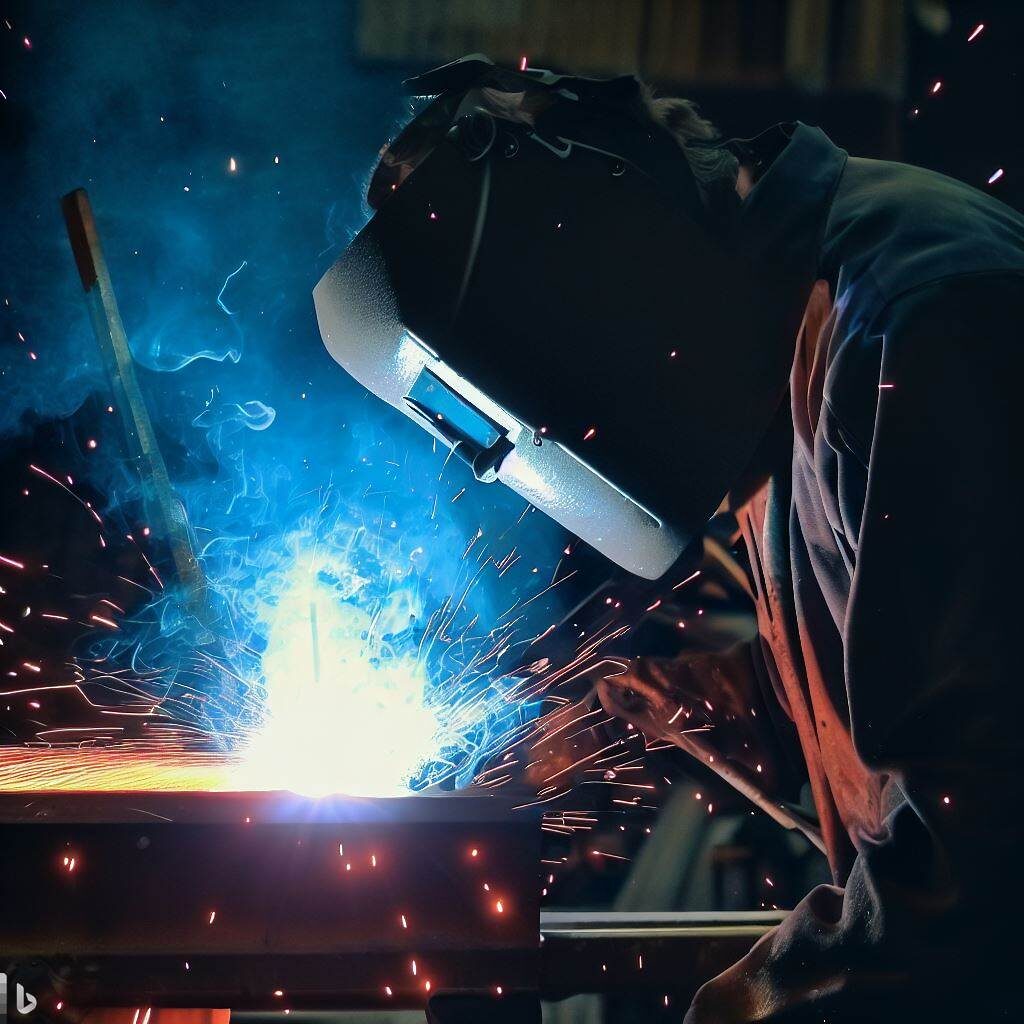
Why METCO provides Powder Coated and Galvanized parts
Why finish a metal surface
Surface finishes do much more than improve appearance. The right finish can increase corrosion resistance, improve durability, maintain electrical conductivity, enhance product appearance, and reduce long-term ownership costs. For many fabricated products, finish selection has as much impact on performance as the material itself.
Every application presents different environmental challenges. Components may operate indoors, outdoors, near chemicals, in high-humidity conditions, or in environments exposed to road salt or UV radiation. A finish that performs well in one setting may fail in another, making finish selection an important engineering decision rather than simply a cosmetic choice.
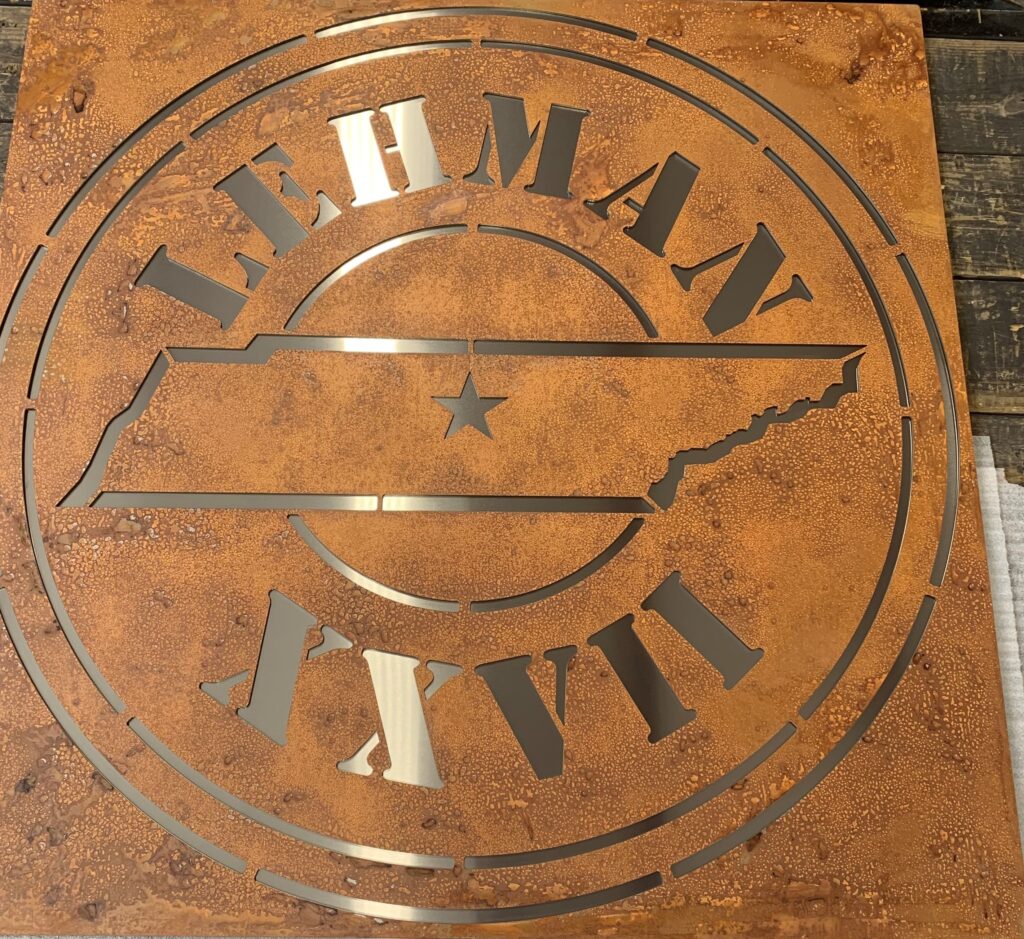
The primary purpose of many finishes is corrosion protection. Powder coating and paint create protective barriers that separate metal from the environment. Zinc plating and hot-dip galvanizing provide sacrificial protection to steel. Nickel plating improves both corrosion and wear resistance, while chem film helps protect aluminum without sacrificing electrical conductivity. Black oxide provides light corrosion protection when paired with oils or sealants.
Product appearance and Branding
Surface finishes also influence product appearance and brand perception. Consistent colors, textures, and gloss levels help manufacturers create professional-looking products while reinforcing brand identity. Powder coating and paint systems offer a wide range of colors and decorative options for customer-facing equipment and enclosures.
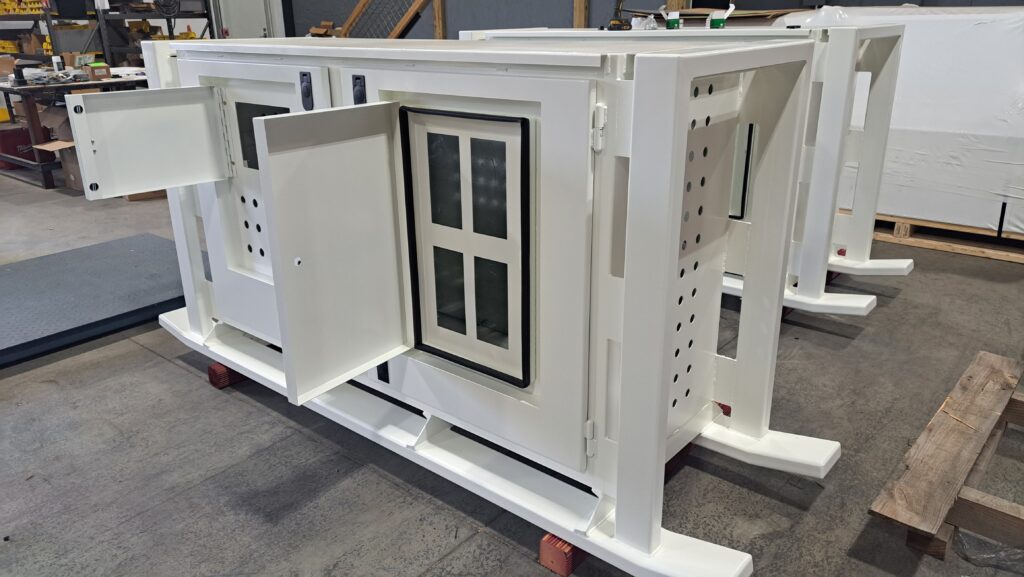
Durability and wear resistance often drive finish selection for industrial products. Components exposed to abrasion, impact, vibration, or frequent handling may require specialized coatings that resist scratching and surface damage. Choosing the correct finish can reduce maintenance, extend service life, and lower lifecycle costs.
METCO helps customers evaluate application requirements, environmental exposure, appearance goals, and performance needs to identify the most appropriate finishing solution. Through a network of qualified finishing partners, METCO coordinates coating and plating services as part of a complete manufacturing solution.
Contact METCO Metal Fab for Design assistance sales@metcometalfab.com→
Powder Coating Services
Powder coating is one of the most durable and versatile finishing options available for fabricated metal products. It provides corrosion protection, wear resistance, and a professional appearance while offering a wide range of colors, textures, and gloss levels. METCO coordinates powder coating through qualified finishing partners and delivers finished components as part of a complete manufacturing solution.
What Is Powder Coating?
Powder coating is a dry finishing process that applies electrostatically charged powder to a metal surface. The coated part then enters a curing oven, where the powder melts and chemically bonds to the substrate, creating a tough, continuous finish. This process is commonly used on steel, stainless steel, aluminum, galvanized steel, and galvannealed steel components.
Powder Coating Finish Options
Powder coating offers far more than a single appearance. Manufacturers can select finishes that match both functional and aesthetic requirements.
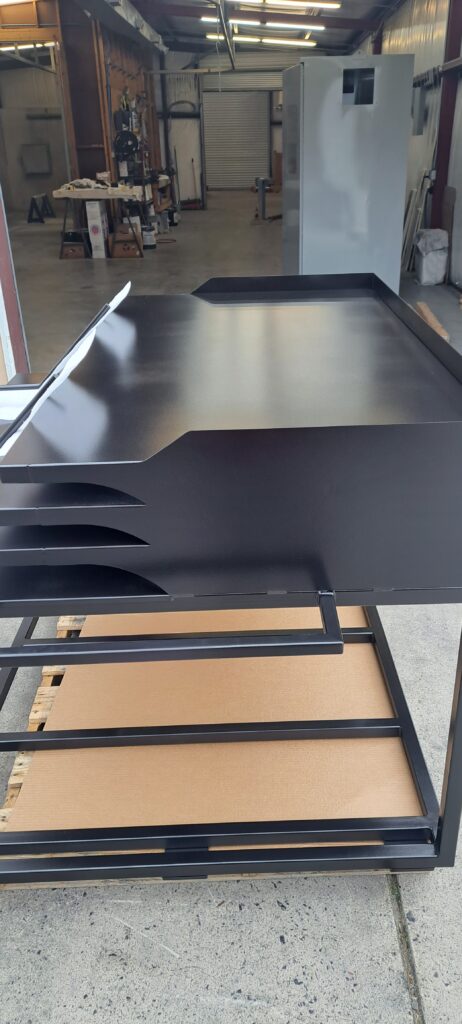
Matte Finishes
Matte powder coatings provide a low-gloss appearance that minimizes reflections and fingerprints. Many OEMs choose matte finishes for control consoles, industrial equipment, and electrical enclosures where a clean, modern appearance is important.
Satin and Semi-Gloss Finishes
Satin finishes balance appearance and durability. They provide a professional look while making cleaning easier than some textured coatings.
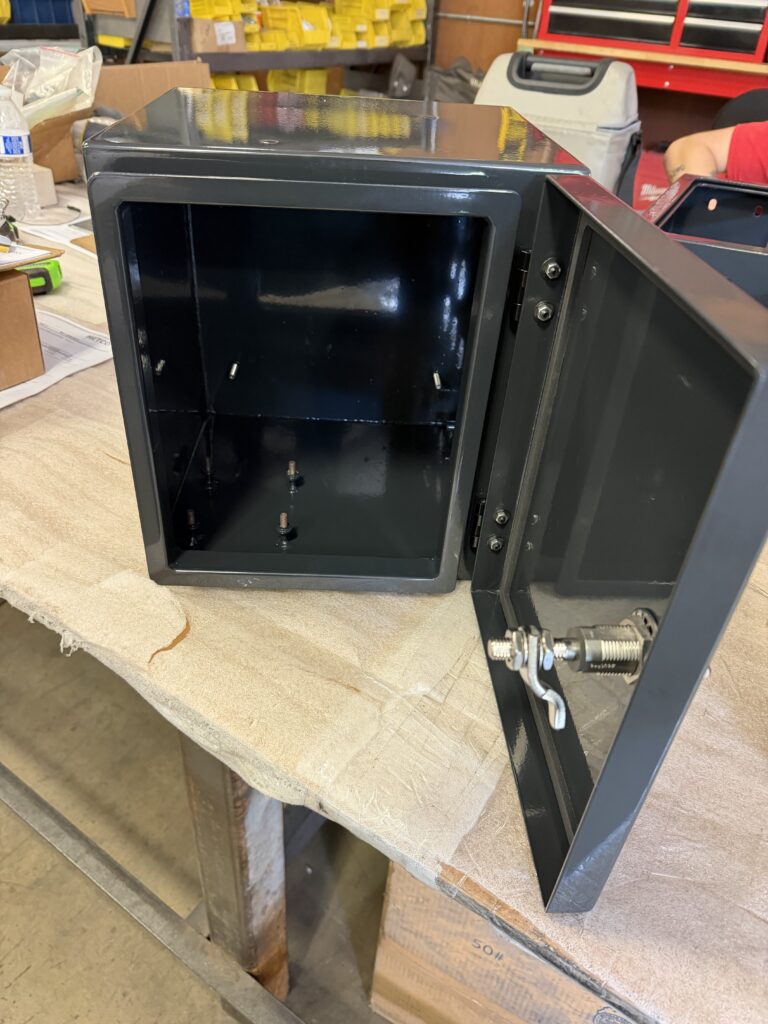
High-Gloss Finishes
Glossy powder coatings create a smooth, vibrant appearance that highlights color and improves visual impact. Retail displays, customer-facing equipment, and branded products frequently use high-gloss finishes.
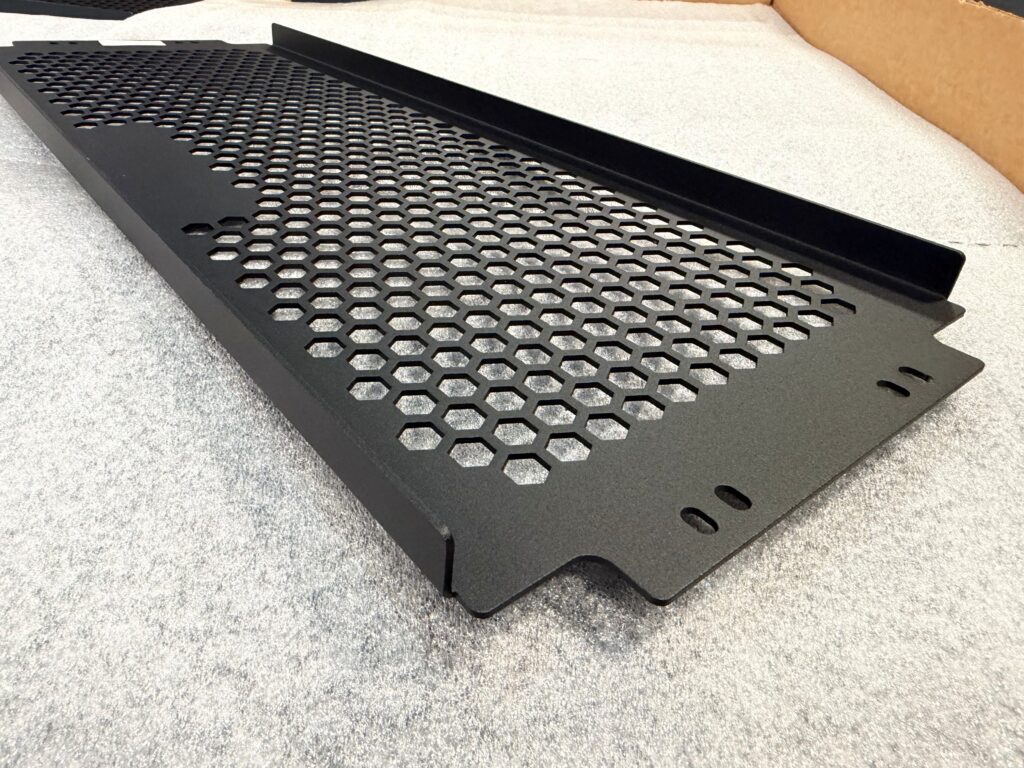
Textured Finishes
Textured powder coatings help conceal minor surface imperfections, weld marks, and handling scratches. Popular options include wrinkle, hammertone, and fine-texture finishes. These coatings are commonly specified for machine frames, material handling equipment, and industrial enclosures.
Indoor vs. Outdoor Powder Coating
Not all powder coatings are designed for the same environment.
Indoor applications often utilize standard epoxy or hybrid coatings where UV exposure is limited. These systems provide excellent appearance and durability within controlled environments.
Outdoor applications typically require exterior-grade polyester powder coatings engineered to resist sunlight, moisture, temperature fluctuations, and weather exposure. These formulations deliver improved color retention and reduced fading over time. Agricultural equipment, outdoor enclosures, kiosks, and infrastructure components often require outdoor-rated powder systems.
Color Selection Considerations
Powder coating is available in thousands of colors, including standard RAL colors and many custom options. However, color availability can affect project cost.
For prototype quantities and low-volume production runs, selecting a standard stocked color is usually the most economical choice. Black, white, gray, safety yellow, and other common industrial colors are widely available and often carry little or no setup premium.
Custom colors, specialty metallics, and exact brand-matched powders frequently require minimum purchase quantities from the powder manufacturer. Because powder suppliers often package material in box quantities, a small production run may require purchasing significantly more powder than the project consumes. This can increase finishing costs for low-volume orders.
When appearance is critical, METCO can help evaluate whether a standard color, custom match, or alternative finish provides the best balance of performance, lead time, and cost.
Common Powder Coated Products
METCO commonly coordinates powder coating for:
- Electrical enclosures
- Control consoles
- Machine guards
- Material handling equipment
- Retail displays
- Industrial equipment
- Agricultural equipment
- Fabricated steel assemblies
- Aluminum products
Wet Painting Services
Industrial wet painting remains one of the most flexible finishing options available for fabricated metal products. While powder coating is an excellent solution for many applications, wet paint offers advantages when projects require custom colors, oversized assemblies, field touch-up capability, specialized coating systems, or low-temperature curing. METCO coordinates wet painting through qualified finishing partners and delivers finished components as part of a complete manufacturing solution.
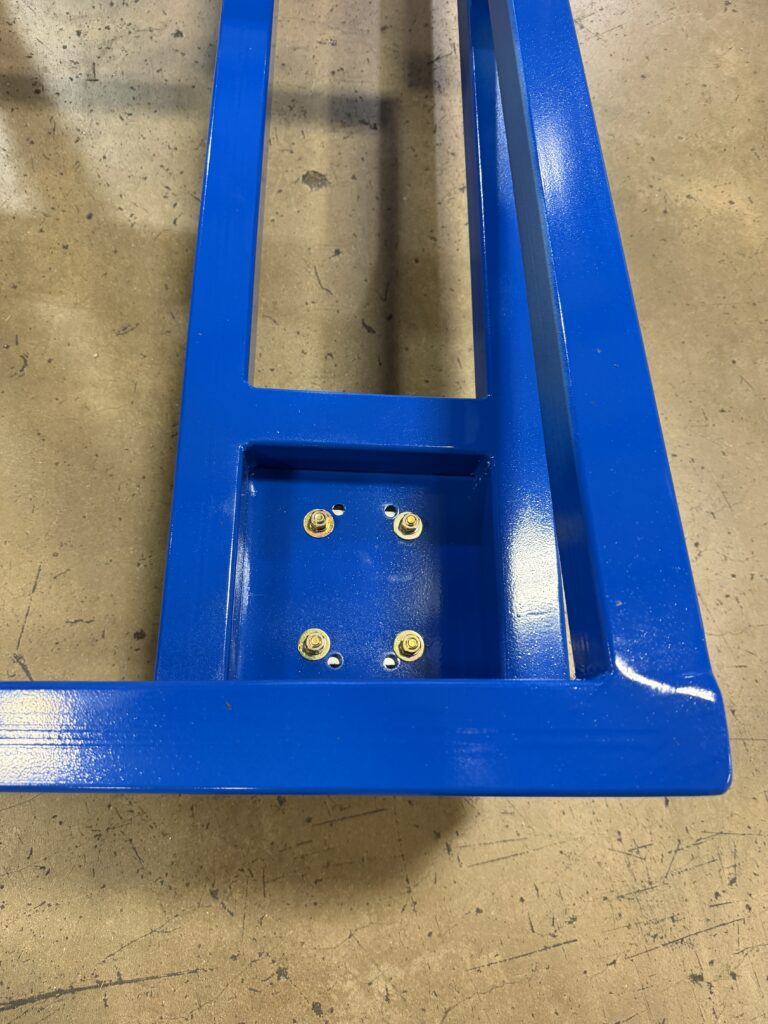
What Is Industrial Wet Painting?
Wet painting uses liquid coatings that are applied to a metal surface and then cured to create a protective finish. Industrial paint systems may include primers, intermediate coats, topcoats, and specialty coatings depending on the performance requirements of the application. These systems are commonly used on carbon steel, stainless steel, aluminum, welded assemblies, machinery, and structural components.
Wet Paint Finish Textures and Finishes
Industrial paint systems offer a wide range of appearance and performance options.
Matte Finishes
Matte paint provides a low-reflective appearance that helps conceal fingerprints and glare. This finish is often selected for control consoles, equipment cabinets, and industrial machinery.
Satin and Semi-Gloss Finishes
Satin coatings provide a balance between durability and appearance. Many OEM products use satin finishes because they clean easily while maintaining a professional appearance.
High-Gloss Finishes
High-gloss paint creates a smooth, vibrant finish that highlights color and branding. Equipment manufacturers often specify high-gloss finishes for customer-facing products and branded machinery.
Textured Finishes
Textured coatings help hide weld marks, grinding patterns, minor surface imperfections, and handling damage. These finishes are frequently used on fabricated weldments, equipment frames, and industrial products exposed to daily wear.
Advantages of Wet Paint
Wet painting remains popular because it solves several challenges that powder coating cannot always address.
Large Assemblies
Many fabricated weldments, machinery frames, skids, platforms, and assembled equipment exceed the size limitations of powder coating ovens. Wet paint can be applied to virtually any size assembly.
Field Touch-Up and Repair
Scratches, transportation damage, modifications, and maintenance repairs can often be touched up without completely refinishing the product. This capability makes wet paint especially attractive for large industrial equipment and structural products.
Specialized Coating Systems
Industrial paint systems are available for chemical exposure, UV resistance, marine environments, high-temperature applications, and other demanding operating conditions.
Indoor vs. Outdoor Paint Systems
The coating system should match the operating environment.
Indoor applications often use simpler paint systems designed for appearance, durability, and moderate corrosion protection.
Outdoor applications typically require primers and topcoats engineered to resist sunlight, moisture, weather exposure, and corrosion. Equipment exposed to years of service outdoors often benefits from multi-coat paint systems that provide additional protection and color retention.
Color Selection Considerations
Wet paint provides exceptional flexibility for color matching. Manufacturers can select standard industrial colors, custom colors, and brand-specific matches.
Unlike powder coating, paint systems generally allow easier color changes and smaller batch quantities. This flexibility can help reduce setup costs when projects require limited quantities or unique colors. For prototypes, low-volume production runs, and equipment requiring exact color matching, wet paint often provides a more economical solution than custom powder coating.
Common Wet Painted Products
METCO commonly coordinates wet painting for:
- Structural steel
- Large weldments
- Machinery frames
- Material handling equipment
- Control consoles
- Electrical enclosures
- Industrial equipment
- Agricultural equipment
- Fabricated assemblies
Hot Dip Galvanizing
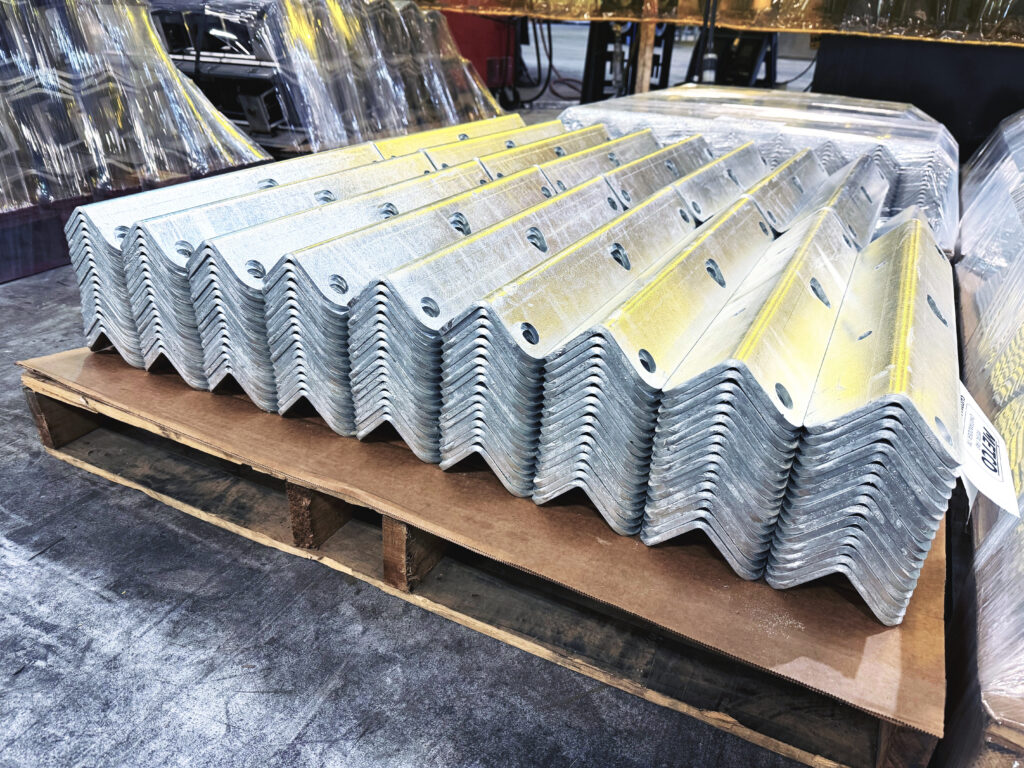
Hot-dip galvanizing provides some of the longest-lasting corrosion protection available for fabricated steel products. During the galvanizing process, steel is immersed in molten zinc, creating a metallurgically bonded coating that protects the steel through both barrier and sacrificial corrosion mechanisms. Unlike zinc plating, galvanizing creates a much thicker coating that can add measurable dimensions to the part. Engineers should account for coating buildup on threaded features, close-tolerance holes, mating surfaces, and precision assemblies during the design stage. Most machining, welding, and fabrication operations should be completed before galvanizing to avoid damaging the protective zinc layer. ASTM A123 is the primary specification used for galvanized fabricated steel products.
For outdoor equipment, utility infrastructure, structural steel, platforms, support frames, and municipal assets, hot-dip galvanizing often delivers decades of corrosion protection with minimal maintenance. In many environments, galvanized steel can provide a service life measured in multiple decades, making it a popular choice for projects with 30- to 50-year design targets. While galvanized steel does not offer the same corrosion resistance as stainless steel in every environment, it frequently provides a lower lifecycle cost for large fabricated structures because carbon steel and galvanizing typically cost substantially less than stainless steel fabrication. For large weldments and structural assemblies, many organizations continue to choose galvanized carbon steel over stainless steel when long outdoor service life, reasonable cost, and low maintenance are the primary objectives. For even longer performance in aggressive environments, engineers may specify a duplex system that combines galvanizing with paint or powder coating.
Zinc Plating
Zinc plating is a cost-effective corrosion protection solution for steel components that require tight tolerances and minimal dimensional change. Because the electroplated zinc coating is typically measured in microns rather than mils, engineers commonly specify zinc plating for brackets, fasteners, machined parts, hinges, and threaded hardware where excessive coating buildup could interfere with assembly or fit. Unlike hot-dip galvanizing, zinc plating produces a smooth, uniform finish that preserves fine features and thread engagement while maintaining electrical conductivity. Engineers should account for coating thickness during design, especially on precision-machined surfaces, close-tolerance holes, and mating parts. ASTM B633 defines coating thickness classes and performance requirements for zinc-plated steel components.
For properly specified indoor and light-duty industrial applications, zinc plating can provide many years of corrosion protection at a fraction of the cost of stainless steel. However, zinc plating is not typically the preferred choice when a product must survive 50 years of continuous outdoor exposure with little maintenance. In those environments, engineers often consider hot-dip galvanizing, weathering steel, or stainless steel depending on the operating conditions. While stainless steel prices remain substantially higher than carbon steel with zinc plating, the lifecycle cost calculation depends on the environment, expected service life, maintenance requirements, and part complexity. For many brackets, enclosures, hardware components, and fabricated steel parts used indoors or in moderate environments, zinc plating delivers an attractive balance of appearance, corrosion resistance, conductivity, and cost without the material premium associated with stainless steel construction.
Learn more about surface finishes: